
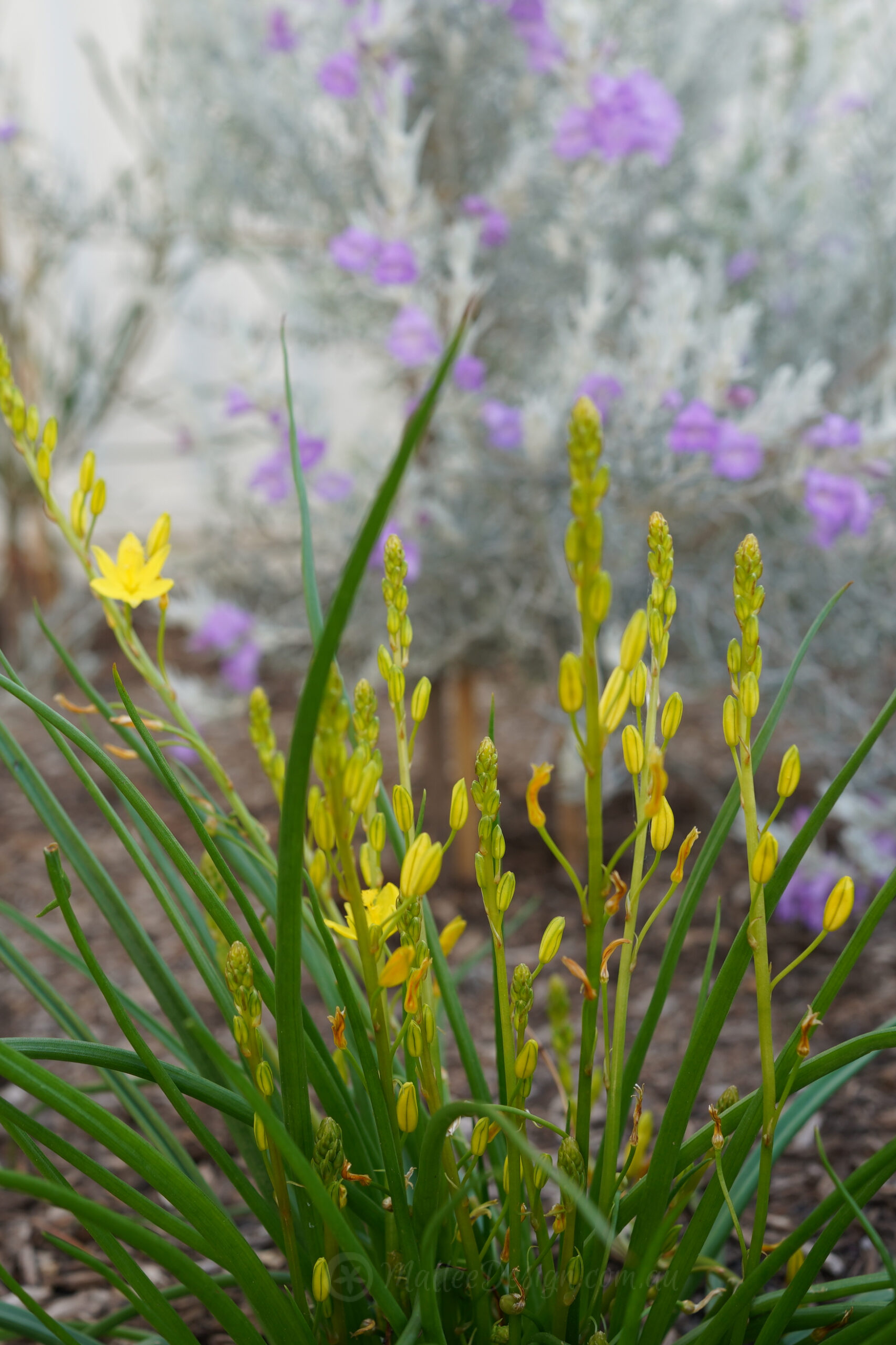
Say hello to this happy little native bulb, this is the native leek or Bulbine bulbosa and I have been using it in designs for the past few years around pond edges and in native cottage style gardens. The bright yellow fragrant flower spikes appear in Spring and when grown in clusters this plant can appear like a yellow carpet and is a great alternative to the daffodil.
This plant has been popular in the northern hemisphere for many years and is sadly under appreciated in Australia. It will grow in full or part sun and tolerates a variety of soils as well as being frost hardy, making it suitable for regions with cooler climates.
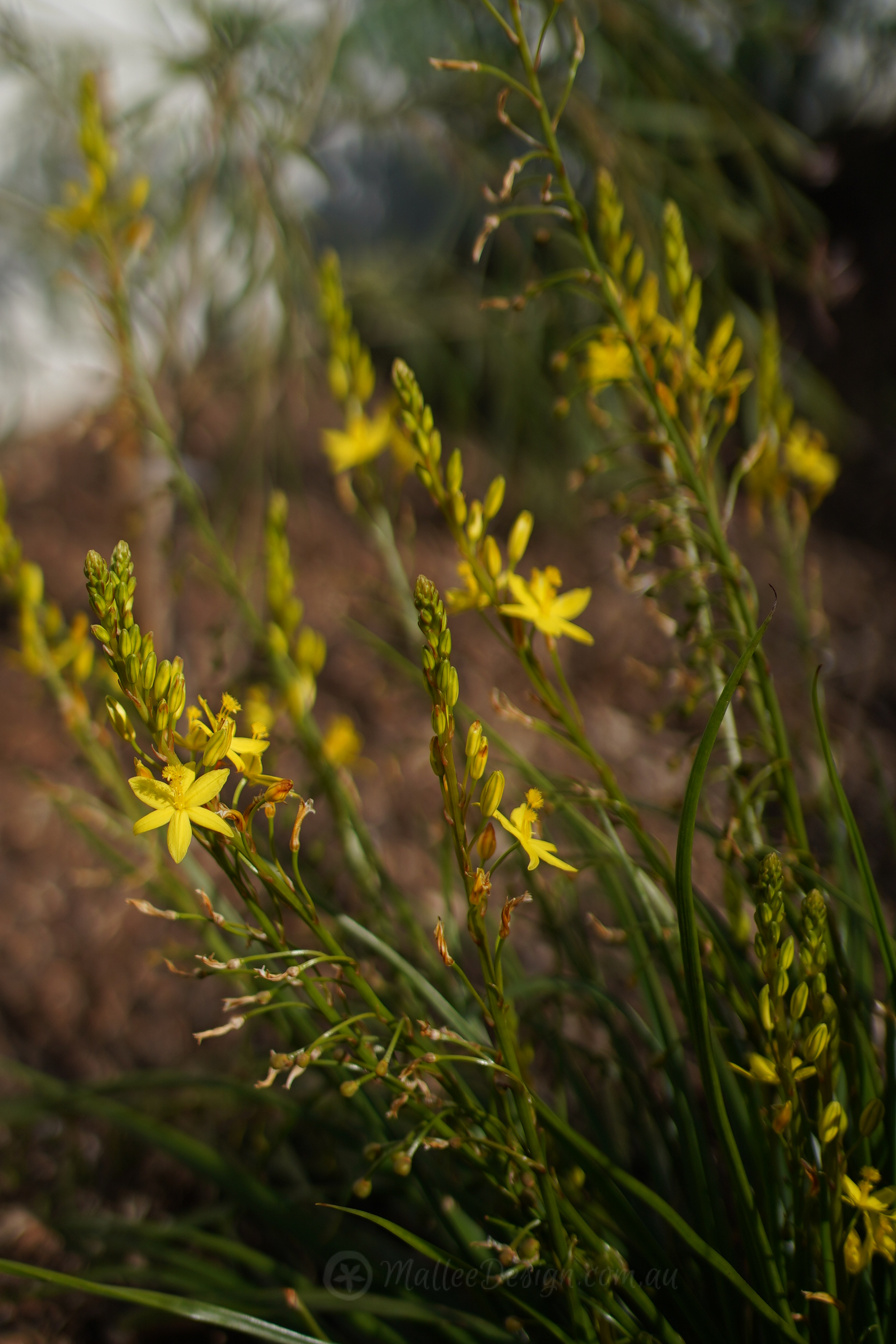
Bulbine bulbosa has a long flowering period, from spring to early autumn (Sept – March). It naturally occurs from Queensland through to Tasmania, on a range of soil types. It likes to be kept moist and will die off in dry periods. The corms will re-sprout with irrigation, downpour or seasonally inundated soils, such as near swamps.
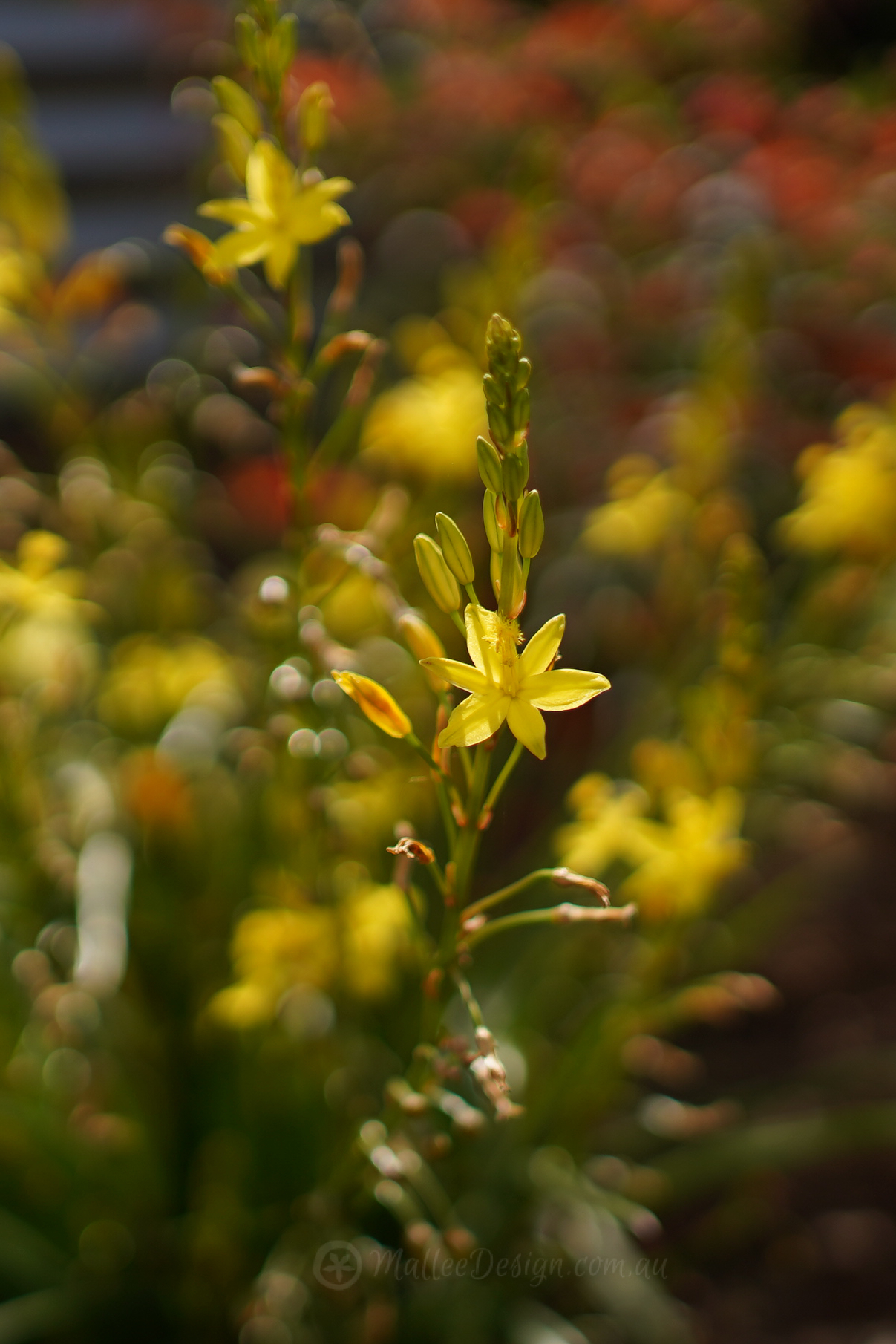
Aboriginal language names for B. bulbosa are milaan, warray, nhaal and gudugaa
Despite the name, the plant does not have a bulb but sprouts from a ‘Corm’, this acts as the energy source of the plant and grows to 25cm in diameter.
This corm was dug up, roasted and eaten, it provided a year round source of carbohydrates, calcium and iron for the First Nations People.
The flowers, individually last only one day attracting bees, butterflies and other insects.
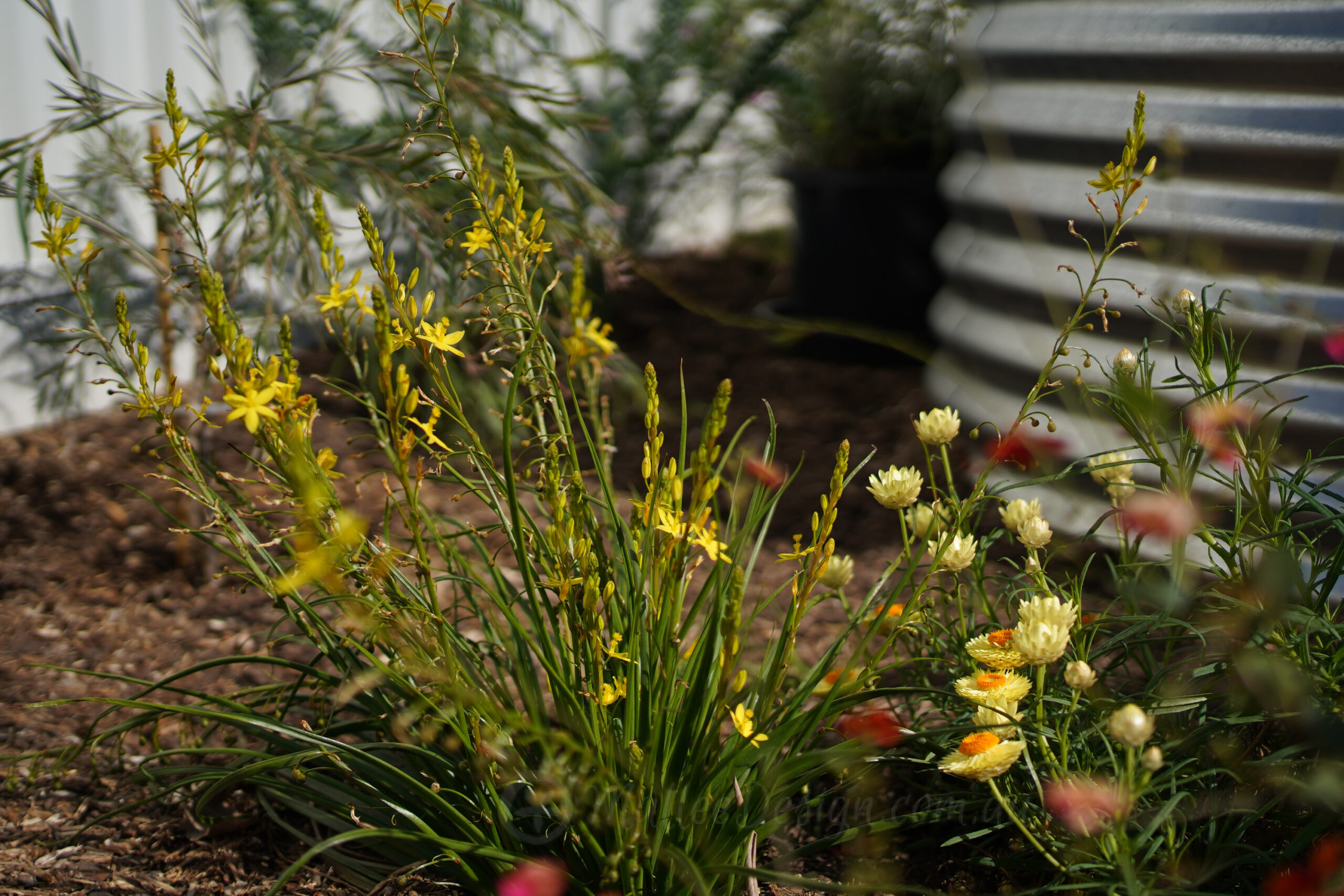
In my own garden it has popped up in a few extra spots but has not taken over or become invasive. I am more than happy to let it wander its way around my pond edge. It can be propagated from seed or by division. It will brighten up any dull corners of the garden.
Leave a Reply