
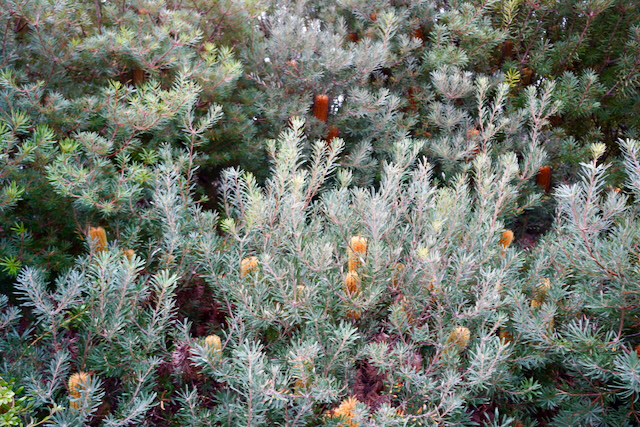
I do love a Winter visit to our nation’s capital, it reminds me of my childhood growing up with real seasons. On my quick visit to the The Australian National Botanic Gardens earlier this Winter I stumbled upon their new collection which to my delight is a Bankisa Garden built to Celebrate their 50th Anniversary. What better way to celebrate than by showcasing the Banksia Genus which all but one occur naturally only in Australia.
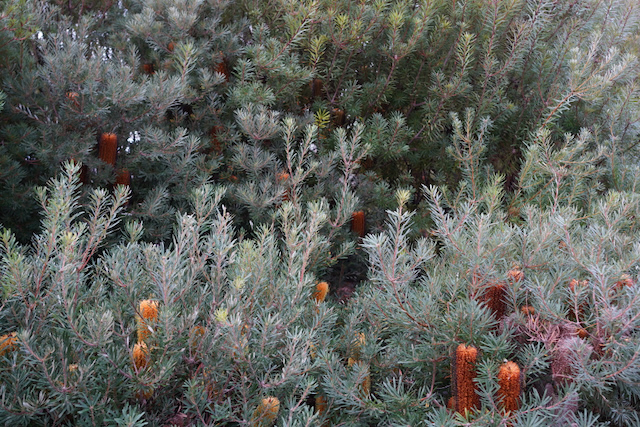
The Banksia garden is not only made up of a selection of our 173 Banksia species, but it also include some hybrids and cultivars as well. Always extra useful when researching a genus.
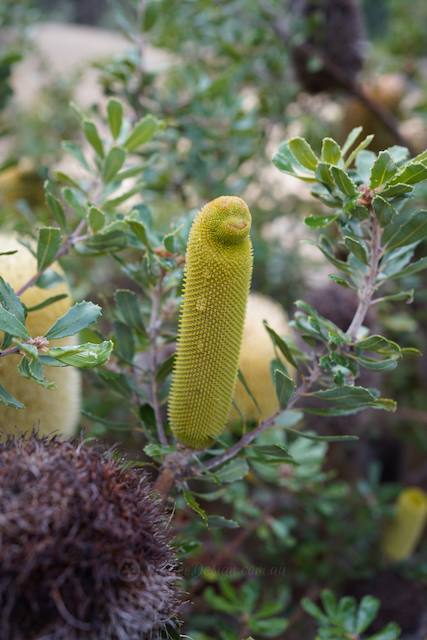
I’ll start with some of the show stoppers which were in flower, the above and below images are of is Banksia epica from Western Australia of course.
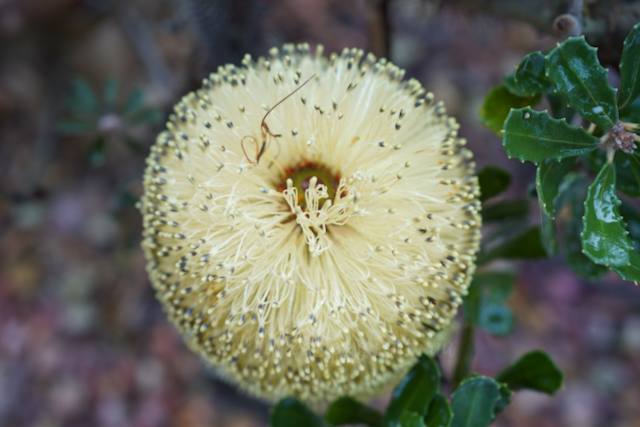
Banksia epica can be found growing naturally on limestone cliffs along the coastline of the great Australian Bite. It is planted in a raised bed in gravelly soil in Canberra, and was flowering its head off in the cold months of June.
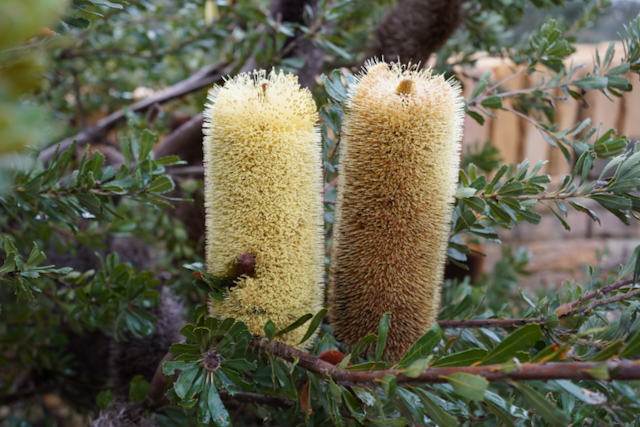
Another striking WA Banksia species is Banksia menziesii, this medium to large shrub was not very impressive in habit but it did make up for it in flowers, these pinky/red blooms are something special. Aparently this is a tree species of Banksia which can get upto 10 metres tall on the West coast of WA.
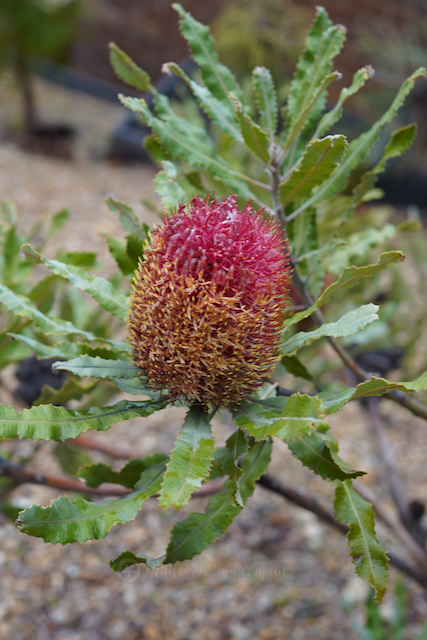
Another Banksia with warn reddish undertones is Banksia occidentalis, again hailing from Western Australia but not impossible to grow here on the East Coast.
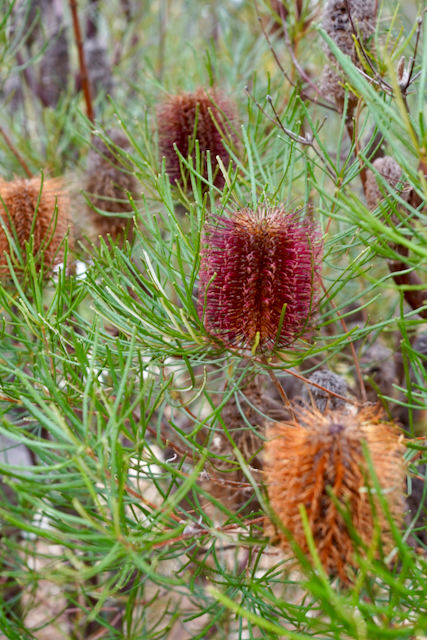
In fact I have a grafted one in my garden which is covered in cones which havent opened yet, so stay tuned.
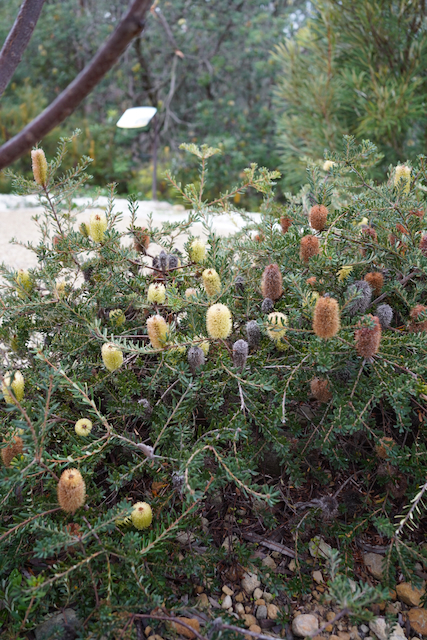
One Banksia species which I haven’t been successful in growing is Banksia marginata, there is a small shrub form called ‘Bright’ and a lower ground cover form named ‘Mini Marg’, which you can see in the image above. From what I can tell marginata is not a fan of humidity so does very well in the southern and western states.
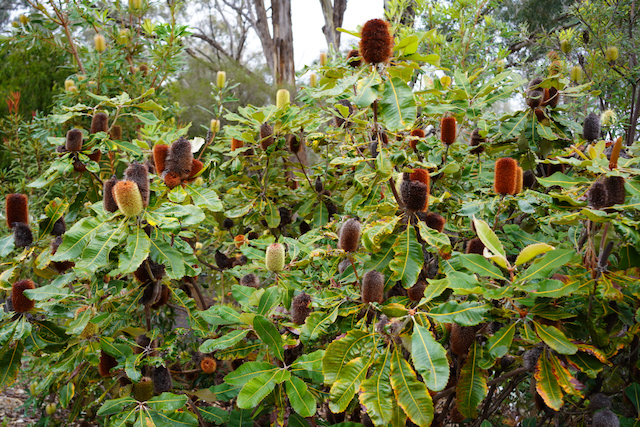
Then there is good old Banksia robur, or the swamp Banksia which doesn’t shy away from wet feet. It grows naturally along the east coast from the Illwarra all the way up to Gladstone in Qld. I regularly use this Banksia in design it is a large shrub or small tree and can be easily shaped to your liking.
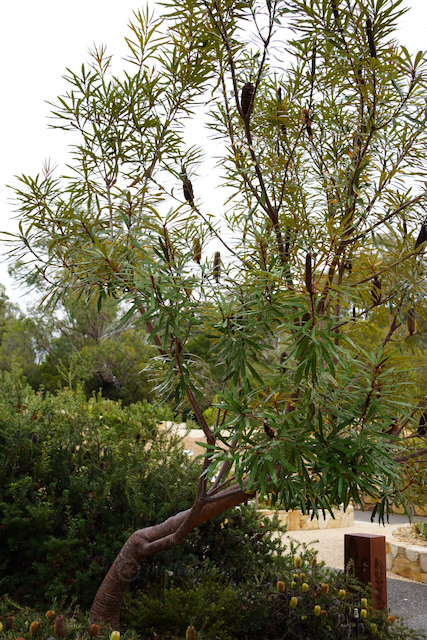
Now I am not sure how they grew this Banksia plagiocarpa with the Heavy frosts of ACT but here you have it, the Hinchinbrook Banksia, thriving.
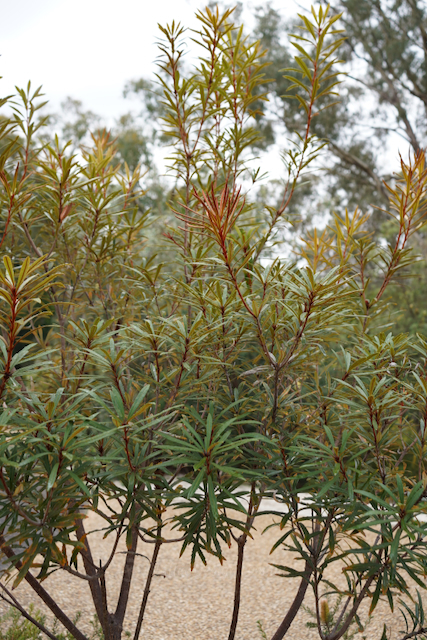
I love plagiocarpa for its reddish, velvety new growth and elegant small tree habit, well worth trying in your garden in a sheltered position.
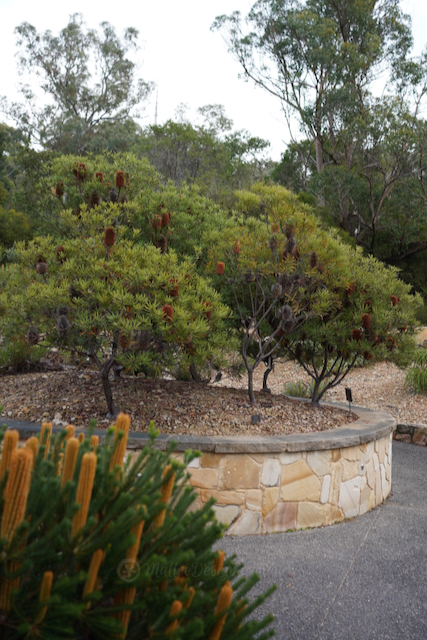
Much of the planting in the Banksia garden is in these lovely raised garden beds, which are then topped with crushed sandstone as mulch.
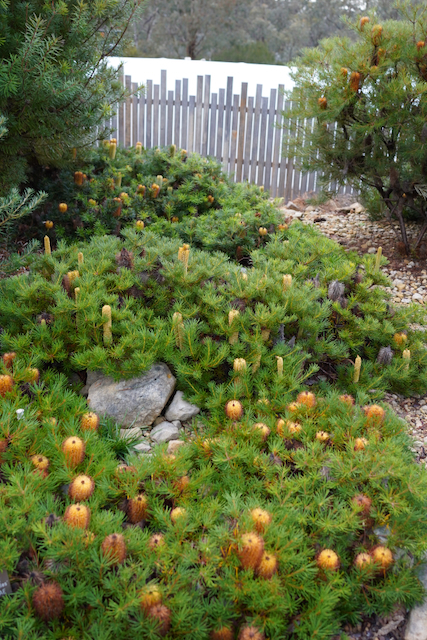
I only really took photos of one Dwarf Banksia spinulosa and that is ‘Costal Cushions’, mainly as it is the species I use most often, I like the way it mounds and spreads, more like a ground cover than a shrub.
And lastly one of my favourite natural Banksia groundcovers Banksia blechnifolia, which in my opion doesnt even need to flower to be worthwhile growing.
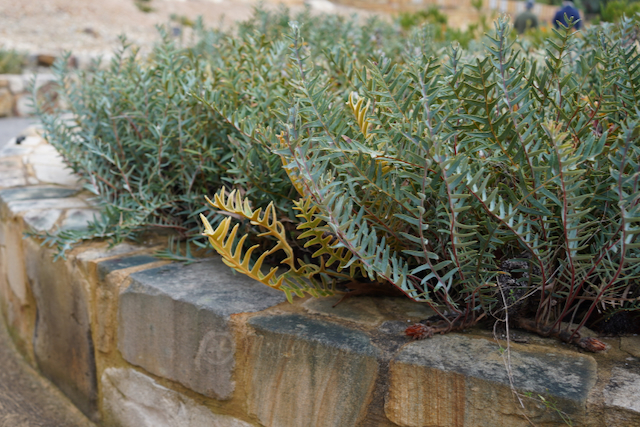
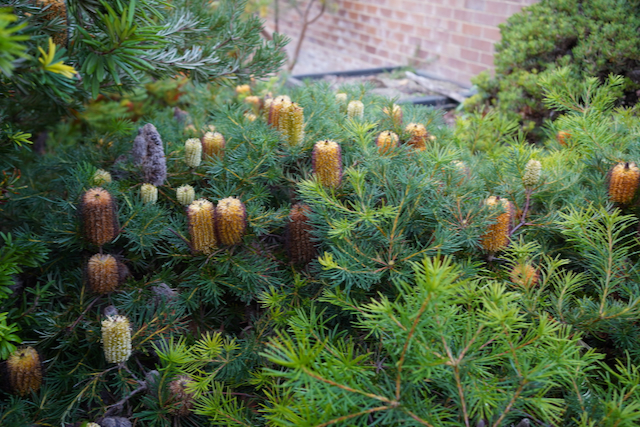
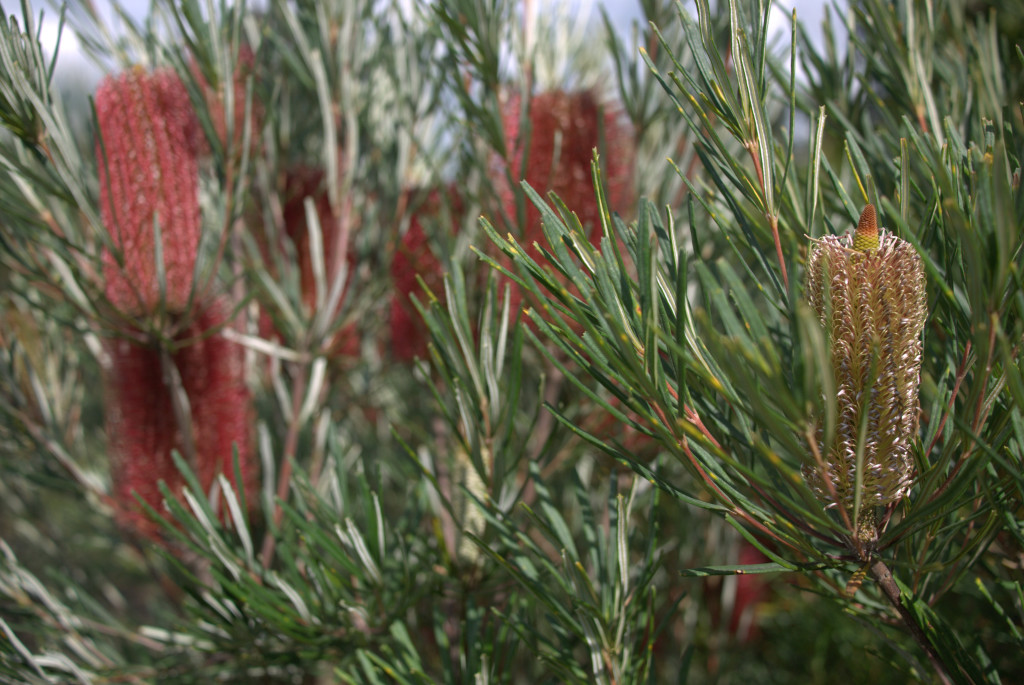
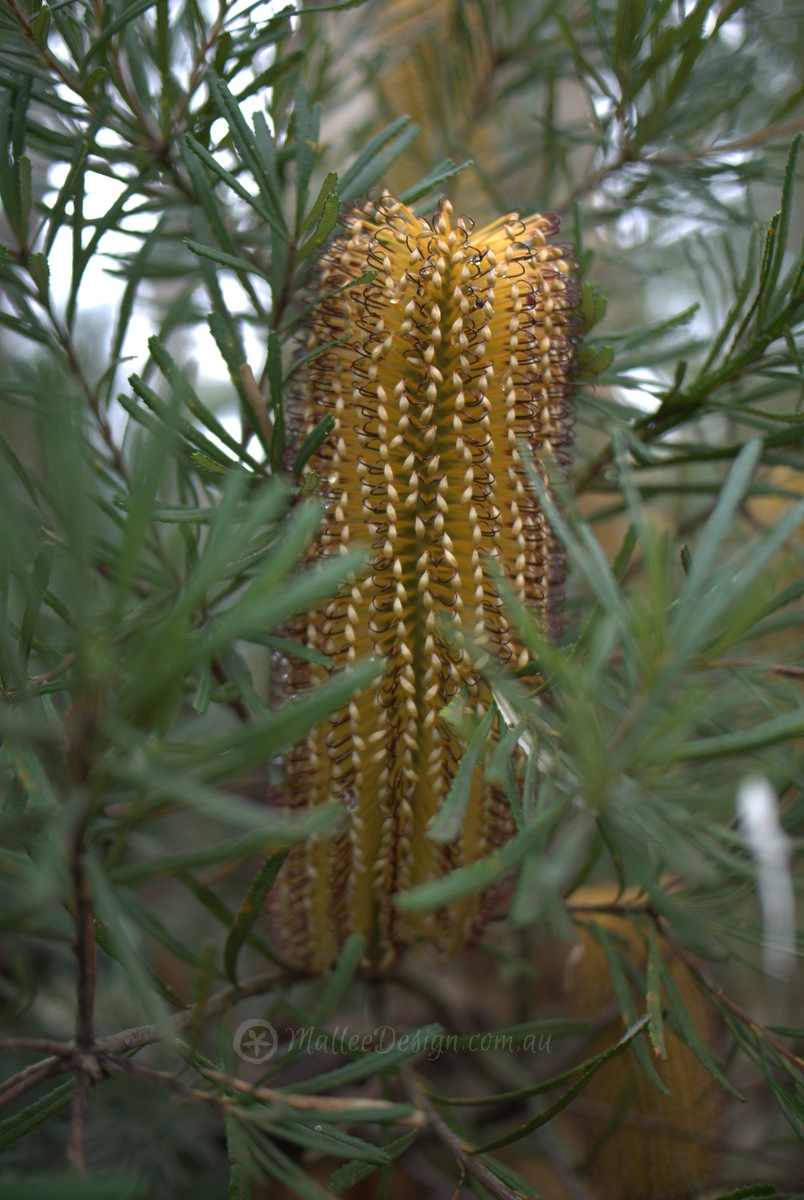
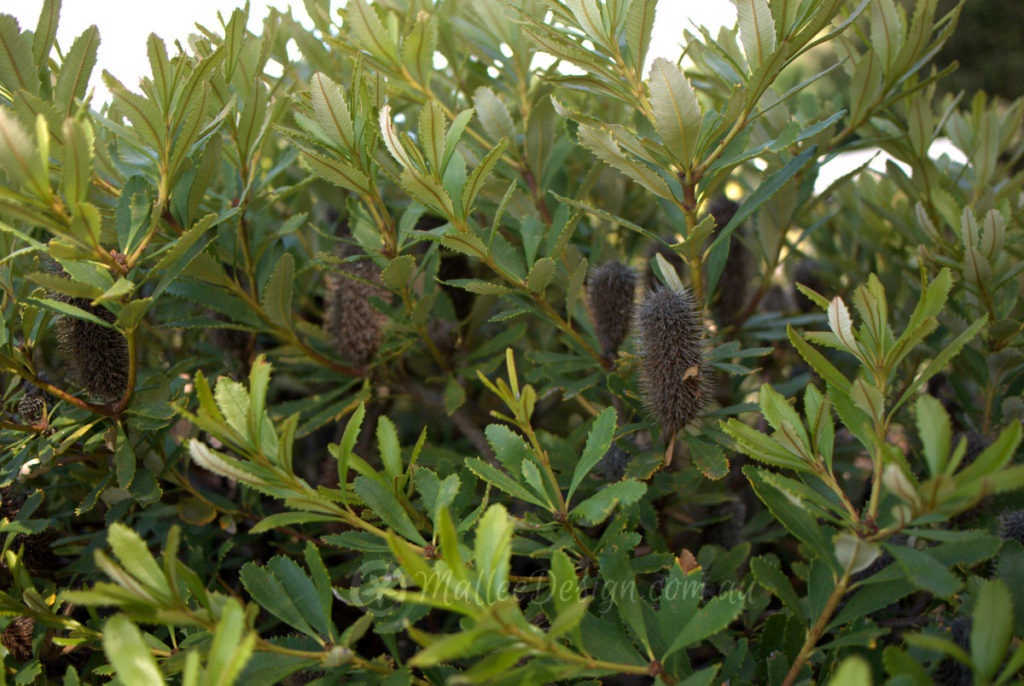
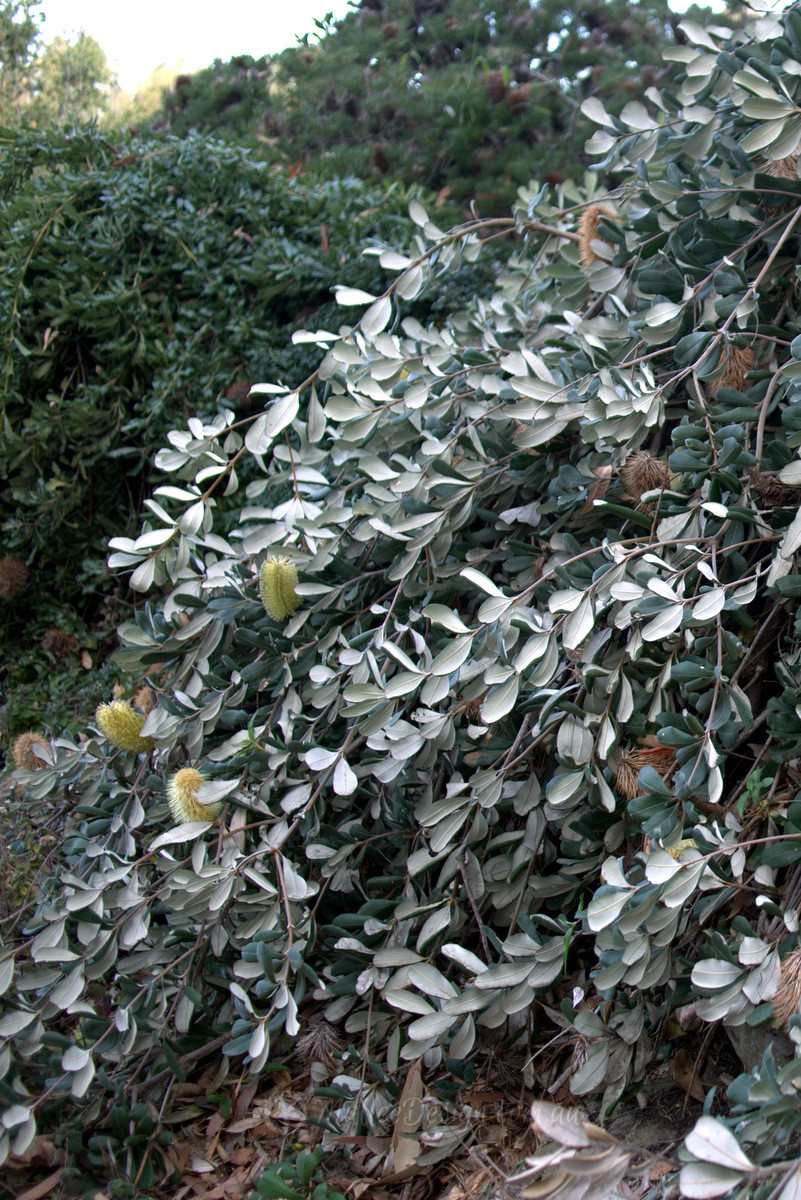
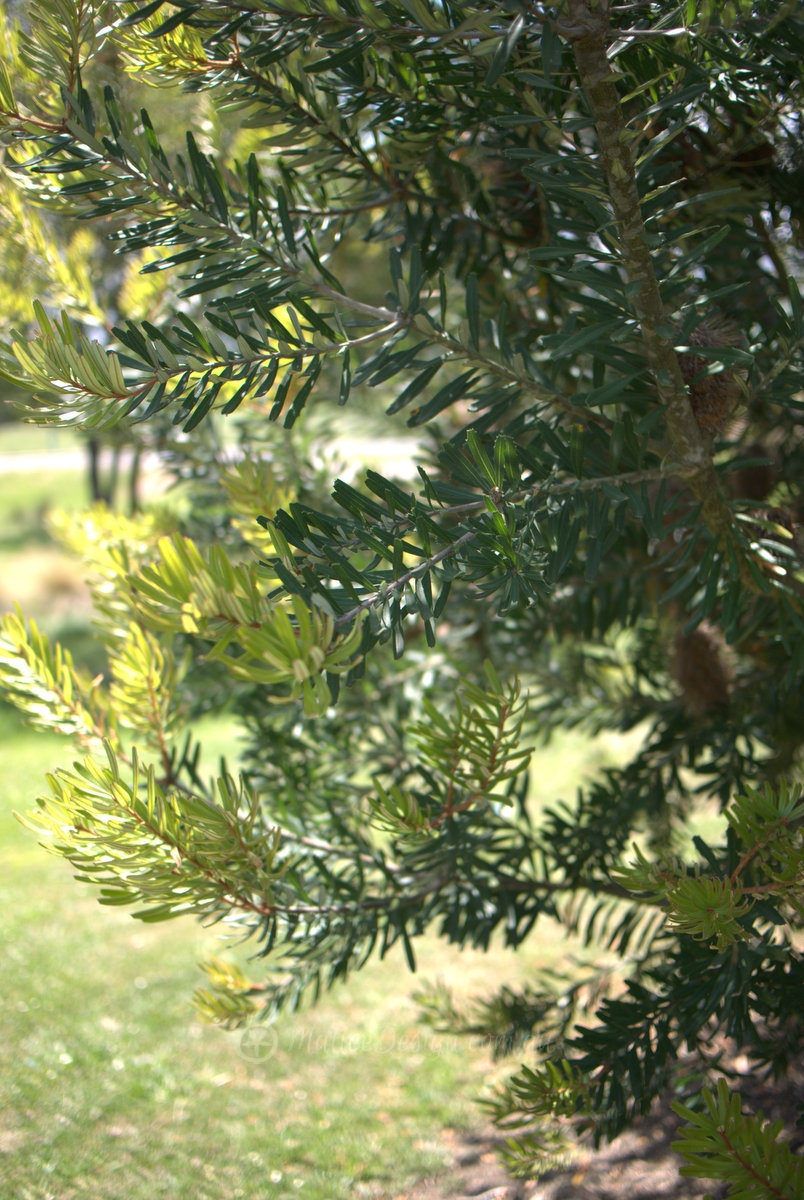
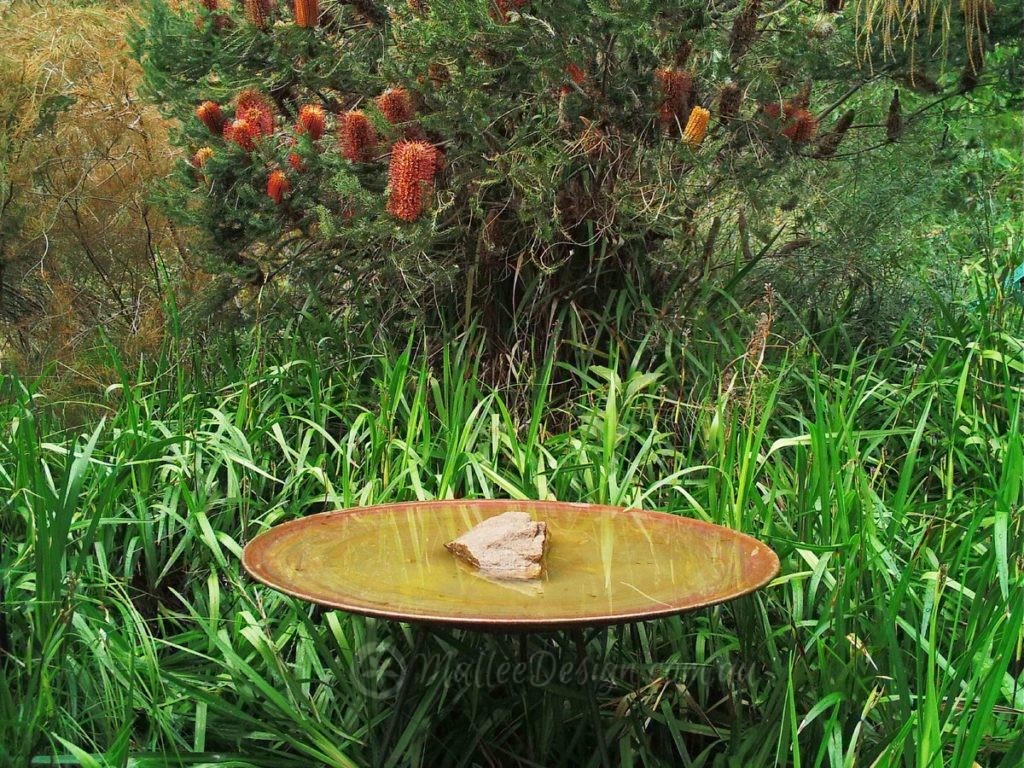
This Banksia also hails from sothern WA, and in my experience it can be grown in the Eastern states as long as you have supplied inorganic mulch for it to trail over. And now I would like to ask this hive mind if the images in the top of this post are Banksia cunninghamii, unfortunately the tags were buried but I loved tis Banksia so much I thought I would include it anyway and see if someone out there might like to clarify the species for me, thanks in advance.
Leave a Reply